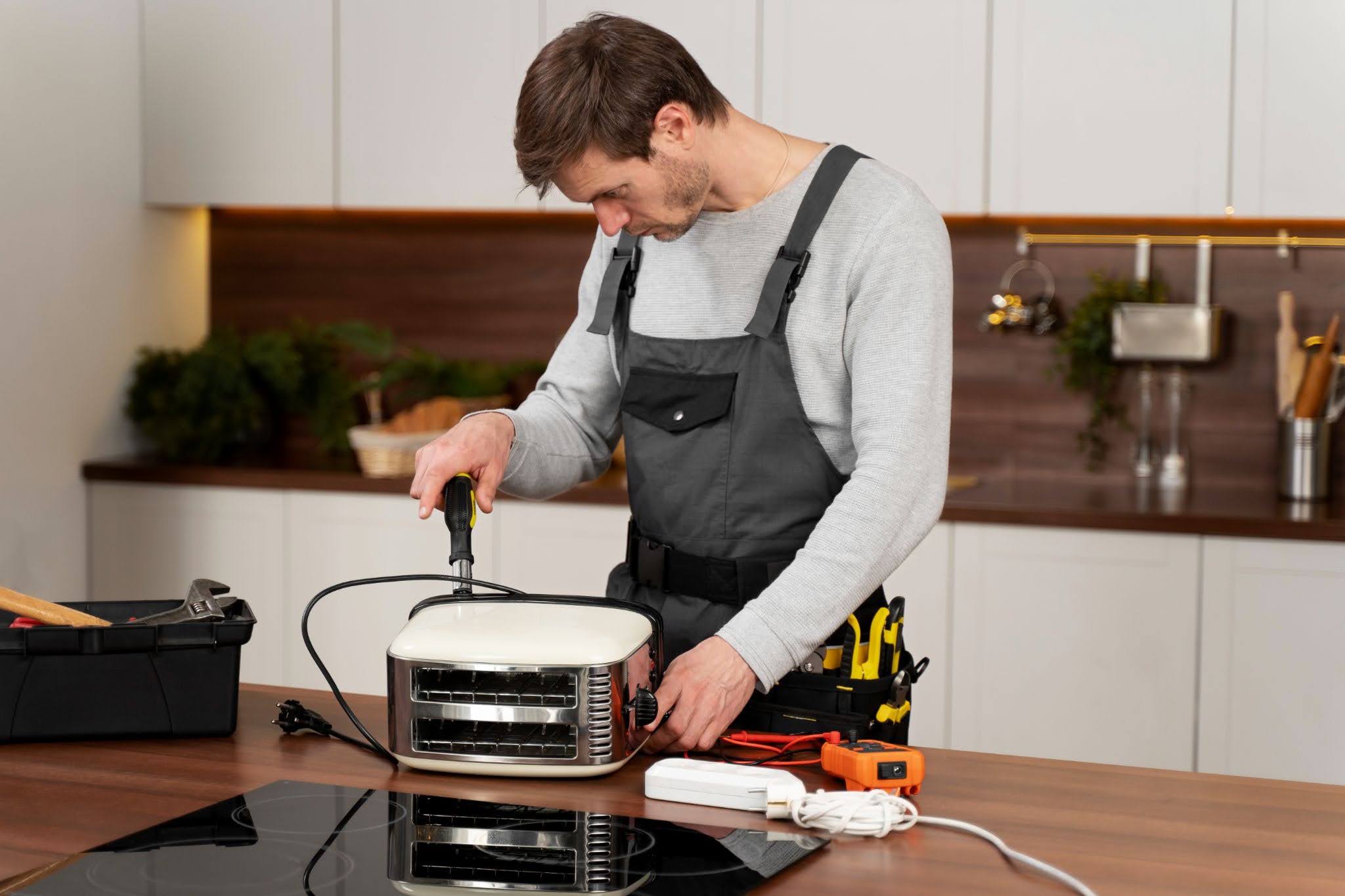
Refrigerators, washers, dryers, dishwashers, and ovens are so ordinary that most of us only think about them when they stop working. When that happens, a skilled appliance repair technician figures out what went wrong and fixes it safely. If you like solving puzzles with your hands and your head, it is a trade worth understanding.
This guide covers what the job involves, the skills and credentials that matter, what the pay looks like, and how a beginner can take the first steps.
What does an appliance repair technician do?
Appliance repair technicians install, diagnose, and repair household appliances that run on electricity, gas, or both. A typical day might include:
- Talking with a customer to understand the problem
- Testing parts with a multimeter and reading wiring diagrams
- Diagnosing electronic control boards, sensors, motors, and pumps
- Replacing worn or failed components
- Checking gas connections and ventilation on gas appliances
- Handling refrigerants safely on refrigerators, freezers, and window air conditioners
- Explaining the repair clearly and keeping accurate service records
Today’s appliances often include sensors, control boards, and Wi-Fi connectivity, so the work blends mechanical repair with electrical and electronic troubleshooting.
Skills that matter
- Electrical fundamentals. Most diagnosis comes down to understanding circuits, voltage, and continuity, and knowing how to work around electricity safely.
- Mechanical aptitude. Belts, bearings, pumps, valves, and motors are everywhere in appliances.
- Refrigeration basics. Refrigerators and freezers use the same refrigeration cycle as HVAC systems.
- Problem solving. Good technicians follow a logical process instead of guessing and replacing parts.
- Safety habits. Disconnecting power, handling gas appliances carefully, and lifting heavy units properly.
- Communication. Explaining a technical problem in plain language builds trust.
Credentials to know about
EPA Section 608 certification. EPA regulations under Section 608 of the Clean Air Act require technicians who maintain, service, repair, or dispose of equipment that could release ozone-depleting refrigerants to be certified. EPA offers four certification types; Type I covers servicing small appliances, such as many household refrigerators and window air conditioners, and is earned by passing an exam through an EPA-approved certifying organization. (Sources: EPA Section 608 Technician Certification; EPA certification requirements.)
State or local licenses. Requirements vary. Some states or cities license appliance service work, especially for gas appliances. Check the rules where you live.
Manufacturer training. Many brands offer training on their own products, often through employers.
What does the job pay?
According to U.S. Bureau of Labor Statistics wage data, the median annual wage for home appliance repairers was $50,990 in May 2025. The lowest-paid 10% earned about $36,190 or less, and the highest-paid 10% earned about $80,660 or more. (Source: BLS Occupational Employment and Wage Statistics, SOC 49-9031, via O*NET OnLine.) Pay depends heavily on location, experience, and the types of appliances you work on.
How to get started
- Learn electrical and safety fundamentals first. Appliance repair builds on basic electricity, tools, and job-site safety. These skills also carry over to HVAC and electrical work, which keeps your options open.
- Understand the refrigeration cycle. It is the core of refrigerator and freezer repair.
- Prepare for EPA Section 608 Type I. Study the material and take the exam through an EPA-approved certifying organization.
- Look for formal training or an entry-level role. Options include vocational or community college programs and trainee or helper positions where you learn under an experienced technician.
- Find a mentor. Someone who has done the work can tell you what employers in your area look for and help you avoid common beginner mistakes.
How Empower Trade can help
Empower Trade is a 501(c)(3) nonprofit that offers free online introductory training in the skilled trades, plus one-on-one mentorship, to adults anywhere in the United States. Our training covers the foundations appliance repair depends on, including electrical basics, HVAC and refrigeration fundamentals, tools, trade math, and job-site safety. Through our mentorship program, you can talk through your goals with someone who works in the trades.
Our program does not issue EPA certification or licenses, but it can help you build the foundation and plan your next step.
Frequently asked questions
Do I need a degree to become an appliance repair technician?
No. Many technicians learn through vocational programs and on-the-job training.
Do I need EPA certification to repair refrigerators?
If the work could release ozone-depleting refrigerant, EPA requires Section 608 certification. Type I covers small appliances.
Is appliance repair related to HVAC?
Yes. Both rely on electrical knowledge and the refrigeration cycle, and many skills transfer between them.
Where can I start learning for free?
Empower Trade offers free online introductory training and mentorship for adults across the U.S. Apply here.